

Falls and Sudden Illness
4 videos · Tells standing, sitting and lying on the floor apart to flag falls without false alarms
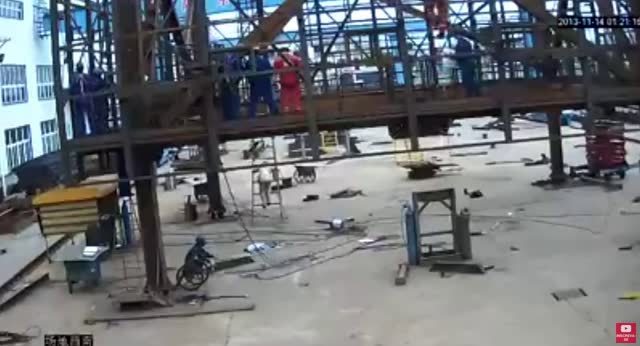
- No alerts so far
Reports with indicators built for this scenario
In the dashboard, each model has its own page with the indicators that matter for this scenario: period totals, computed highlights, breakdown by category and charts over time, per site and per camera.
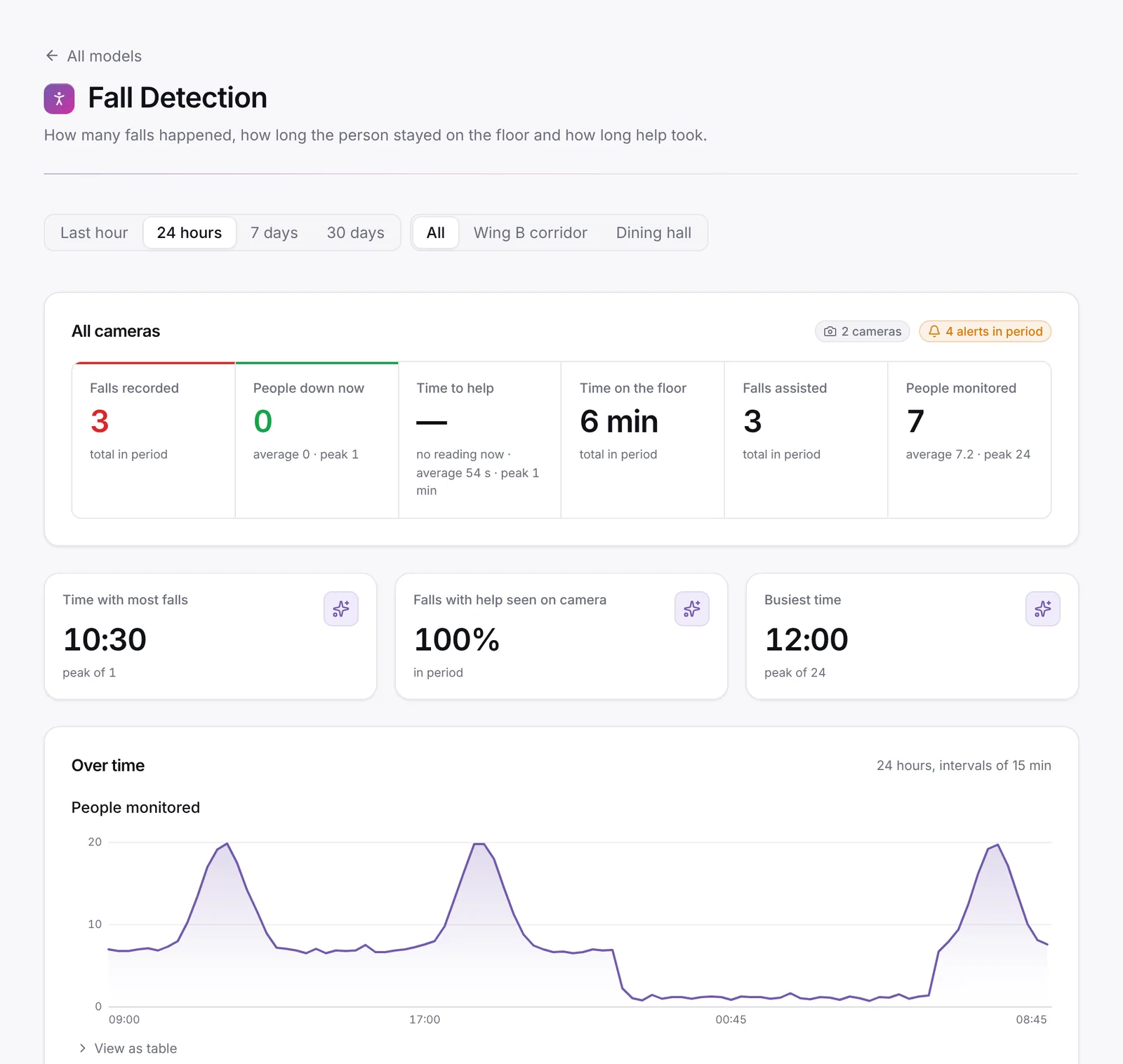
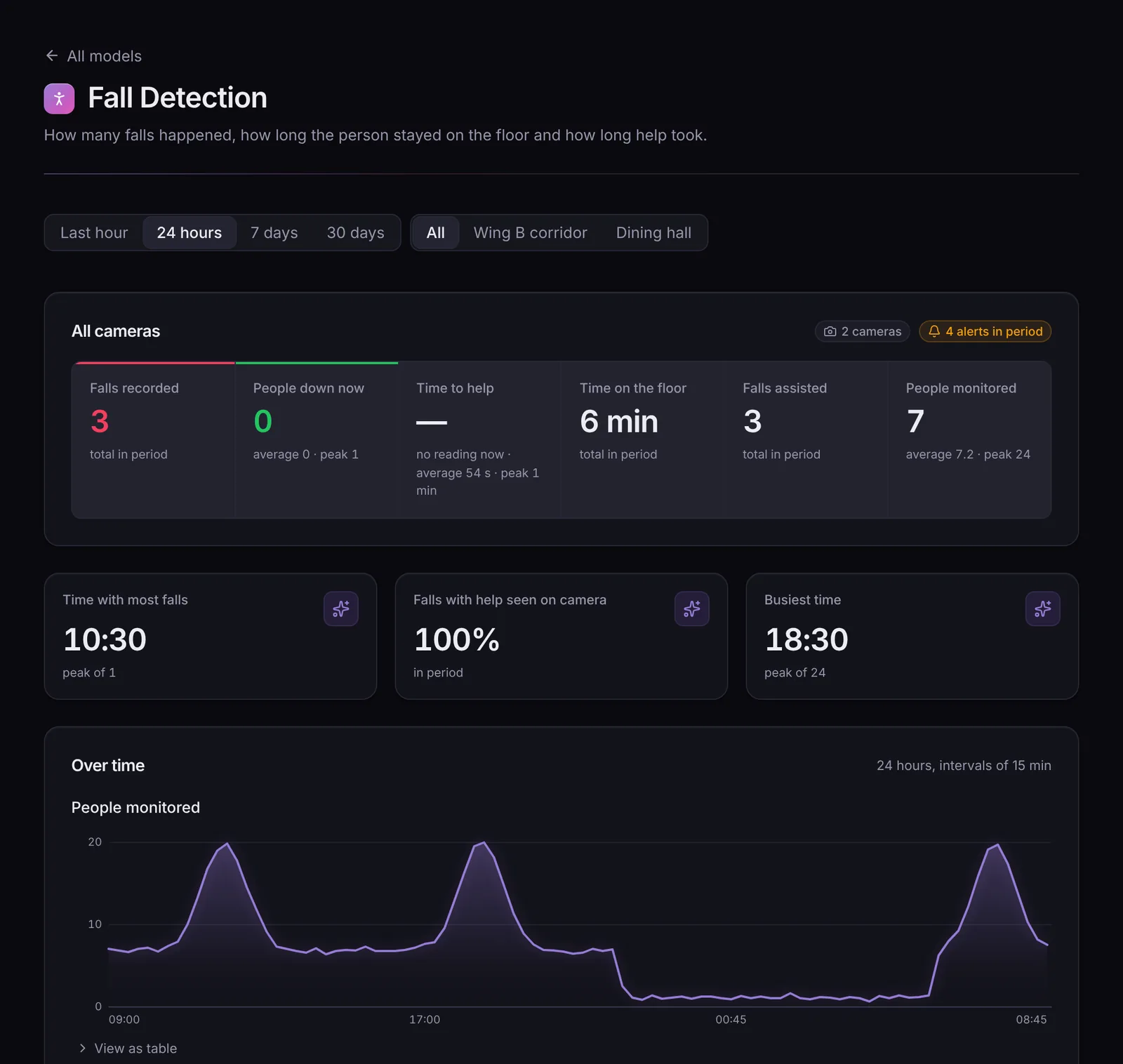
In practice
In factories, warehouses and construction sites, many people work alone or in quiet areas: machine rooms, stockrooms, the night shift. When someone falls or collapses in these places, the biggest risk is how long it takes for anyone to notice.
The AI follows each person's posture through the cameras already installed and tells apart standing, sitting, crouching and lying on the floor. A fall, or a person on the floor for a few seconds, triggers an immediate alert with a photo to the emergency team or the safety department. Someone crouching to pick up a part or sitting down to rest does not trigger an alarm.
Frequently asked questions
- Does the AI confuse crouching with a fall?
- No. It distinguishes standing, sitting, crouching and on the floor, and confirms the posture over several frames. Only a fast drop to the floor, or someone already lying on the floor for a few seconds, triggers an alert.
- Do I need new cameras?
- In most cases, no. The existing IP CCTV cameras work, as long as they show people's whole body.
- Who receives the alert?
- Whoever you choose: the emergency team, safety department, gatehouse or supervisor, on the dashboard, by email or by WhatsApp, always with a photo of the moment.
Where to install the cameras
- Lone-worker areas: machine rooms, substations, stockrooms and cold rooms.
- Stairs, platforms and walkways, where slips and falls from height are more likely.
- Yards and docks on the night shift, with few people around.
About this solution
Human pose estimation (17 body keypoints) applied to every person in the field of view. When it identifies a sudden transition from standing to lying down — or a person down for a prolonged time — the system triggers an immediate alert to the response team, shortening the time to assistance.
- 1The pose model locates each person's shoulders, hips, knees and ankles; the tracker follows each individual.
- 2Standing: legs extended under the hips (knee above 140° and feet well below the hips) — bending over to pick something up still counts as standing.
- 3Sitting: upright torso, thighs nearly horizontal and feet below the hips (chair, bench, edge of the bed). Leaning torso with legs extended = reclining (bed, armchair).
- 4Crouching/kneeling: knees sharply bent with hips close to the heels, or body height much lower than the same person standing.
- 5On the floor: horizontal torso without the legs supporting the body, or feet above the hips. Sitting on the floor: hips at the height of the feet.
- 6Measurements are normalized by the person's own body size and posture is confirmed by voting over several frames, so it does not flicker.
- 7Fall: a person seen standing who reaches the floor with a rapid drop of the hips. A person found already lying on the floor triggers an alert after a few seconds.
- 8An alert with an image of the moment is sent within seconds; sitting, reclining and crouching do not trigger alarms.
Benefits
- Drastically shorter time between the fall and assistance ("long lie").
- Video records for root cause analysis and legal defense.
- Less visual-monitoring burden on the nursing staff.
More demos

Tells standing, sitting and lying on the floor apart to flag falls without false alarms

Hot spots in panels, motors and equipment from thermal cameras

Identifies cell phone use in areas where it is not allowed

Detects closed eyes, yawning and signs of drowsiness in real time

Rings, watches, bracelets, necklaces and earrings in prohibited areas

Parts, boxes or bags counted on the conveyor, with pace, stops and downtime per line