

Grain Conveyor Belt Load
2 videos · Measures how much of the belt is loaded and detects empty running, overload and off-center load
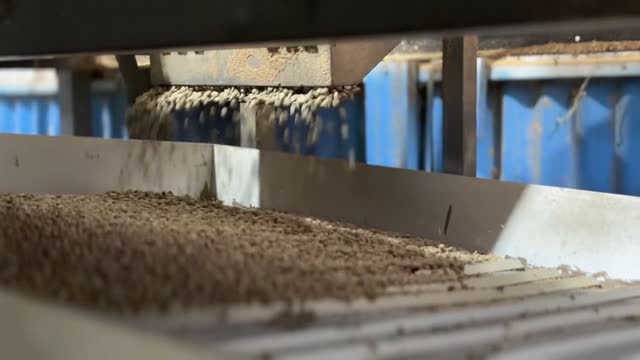
- No alerts so far
In practice
In grain warehouses, cooperatives and terminals, conveyor belts run for hours a day, and much of that time can be with little load or empty. At harvest the problem flips: the intake hopper dumps too much, grain spills over, dirties the area and forces the line to stop for cleaning.
A camera over the belt measures, frame by frame, how much of its width is covered by soybeans, corn, wheat, coffee or meal. Operators see occupancy live and in history, and get alerts when the belt runs empty, when there is a risk of spillage or when the load drifts to one side of the belt.
Frequently asked questions
- Does the camera measure tonnes per hour?
- It measures the share of the width covered and a relative flow index. For tonnes per hour, the index is calibrated against the belt scale or the belt's rated capacity.
- Does grain dust get in the way?
- Heavy dust reduces accuracy. A camera in a protective housing, well lit and with a steady view of the belt section, solves most cases.
- Does it work on coffee and feed belts?
- Yes. The system separates material from empty belt by appearance, with no training for each product.
Where to install the cameras
- Right after the intake hopper, to follow the feed coming from trucks.
- At the inlet of dryers and cleaners, to balance load between machines.
- On the shipping belts to silos, rail cars and ships.
About this solution
A camera above the conveyor belt measures, frame by frame, how much of the belt width is covered by grain (soybeans, corn, wheat, coffee), meal, ore, crushed stone or sand. The system shows the load in real time and over time, identifies the belt running empty (energy and wear with no production), overload with a risk of spillover, and off-center load that causes mistracking and spillage — and combines load and speed into a flow index to balance the feed.
- 1The user marks the belt section with 4 corners; the image is rectified (perspective removed) and split into transverse scan lines.
- 2Text-prompted segmentation (CLIPSeg) separates material from empty belt, without training; a color and texture model fitted on the frame itself refines the load edge.
- 3On each scan line, the fraction of the width covered is measured; the average is the load, and the load centroid indicates centering.
- 4Apparent speed is measured by phase correlation along the flow, discounting the movement of the adjacent structure (compensates for camera movement).
- 5Configurable bands (empty, low, optimal, overload) trigger alerts with photos: empty belt, overload/spillover and off-center load.
Benefits
- Eliminates hours of belts running empty — direct savings on energy and on belt and idler wear.
- Prevents overload and spillover, which cause product loss, cleanup and downtime.
- Detects off-center load before belt mistracking.
- Provides continuous visibility of the feed to balance hoppers, dryers and crushers.
More demos
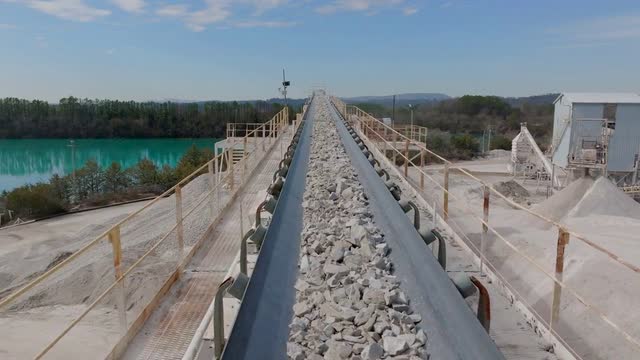
Measures how much of the belt is loaded and detects empty running, overload and off-center load
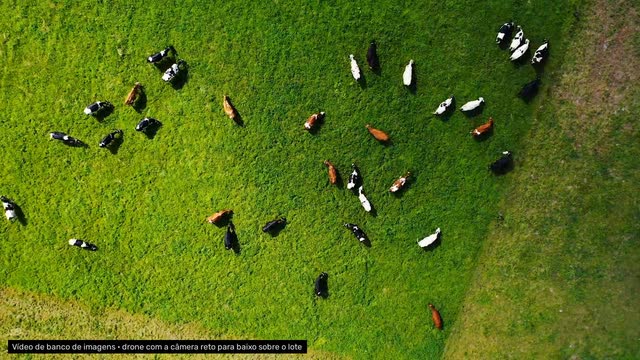
Inventory of cattle and sheep on pasture from drone flyovers

Head count and pen occupancy in feedlots and dairy farms
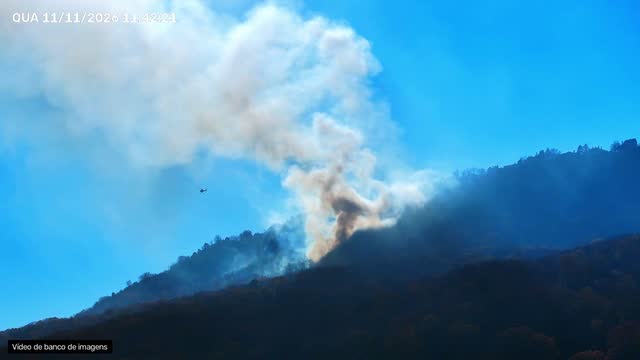
Cameras up high watch farms, planted forests and reserves and flag smoke on the horizon, with the direction of the fire