

Phones in the Classroom
SDA1 · Identifies cell phone use in areas where it is not allowed

- No alerts so far
Reports with indicators built for this scenario
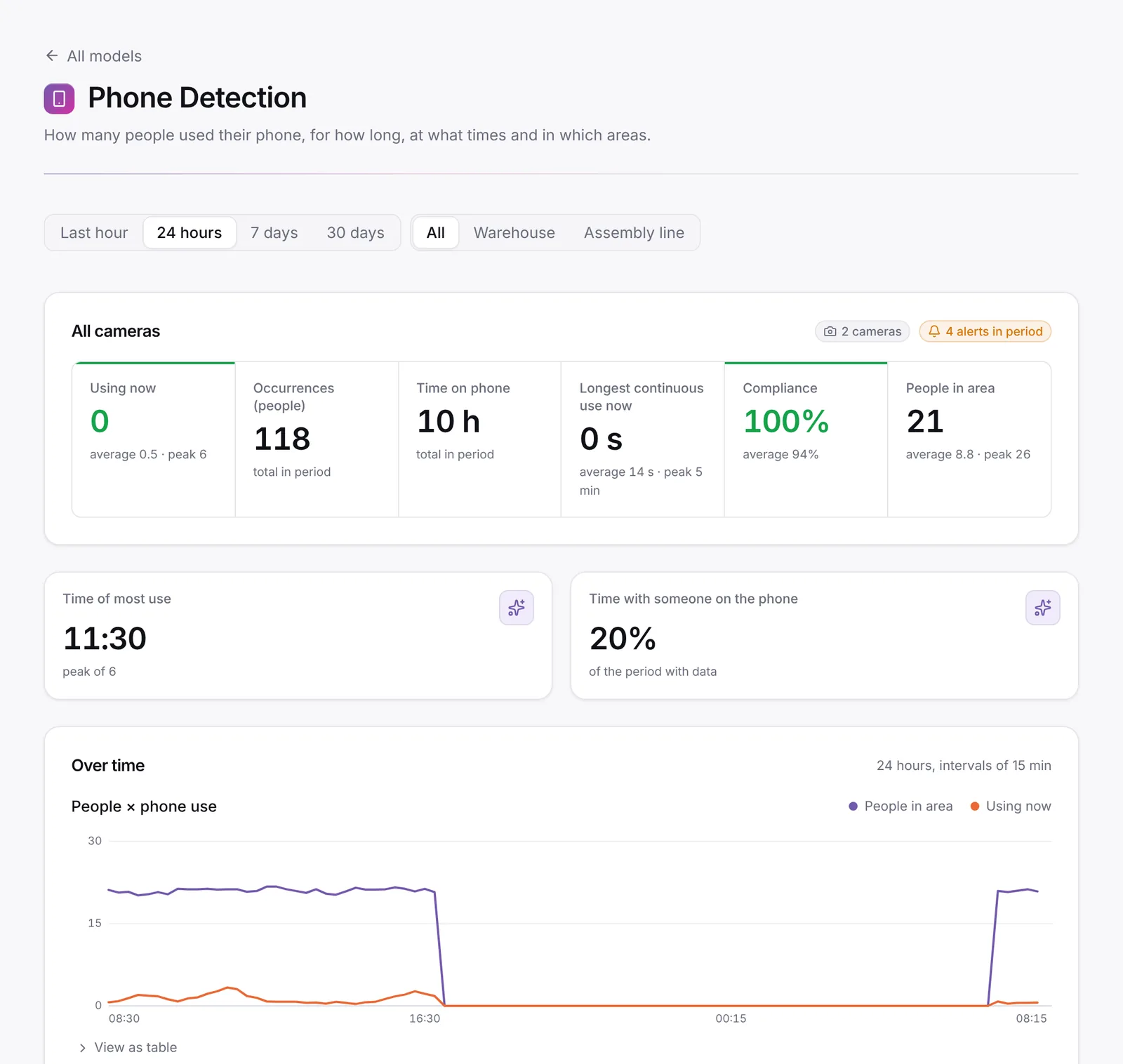
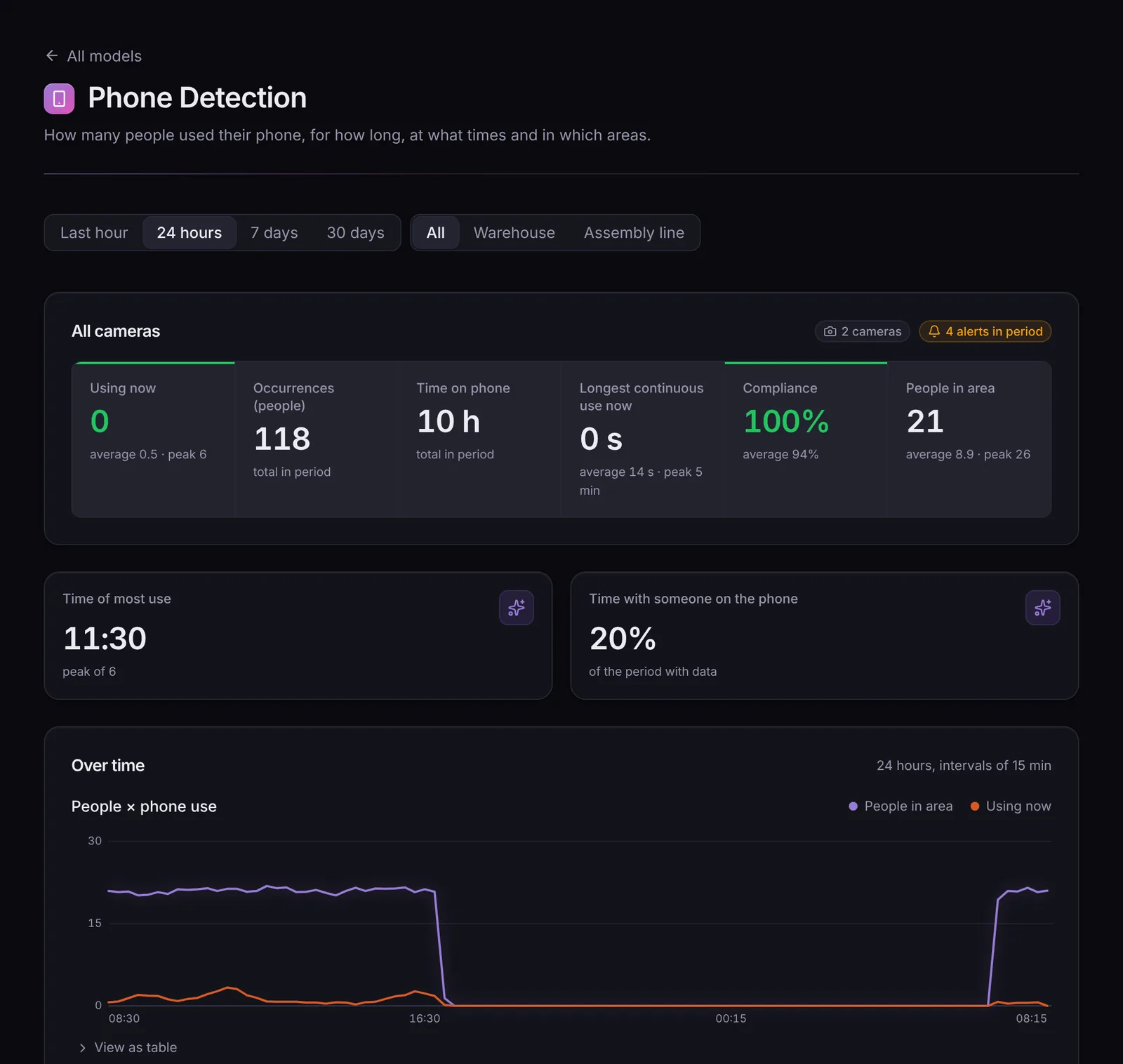
In the dashboard, each model has its own page with the indicators that matter for this scenario: period totals, computed highlights, breakdown by category and charts over time, per site and per camera.
In practice
Phones in the classroom compete for students' attention all the time, and during exams they become a hard-to-catch way to cheat. With stricter rules on phone use in schools, the leadership needs a way to follow compliance without turning the teacher into an inspector.
The classroom camera detects when a phone is in use and logs the event with time and duration, without analysing the screen content. During exams, the invigilator gets the warning straight away. Day to day, the coordinators follow indicators by class and time, which support conversations with students and families.
Frequently asked questions
- Can it be used with students under 18?
- It can, with care: the school should inform students and parents, limit use to educational and safety purposes and restrict access to the images, in line with data protection law.
- Does the AI identify which student used the phone?
- It logs the event with the image of the moment. Naming the student only happens if the school integrates the system with facial recognition with proper consent.
- Does it work in exams and competitive tests?
- Yes. During exams, the alert goes straight to the room's invigilator, with the image, so they can check on the spot.
Where to install the cameras
- Classrooms, with the camera at the front framing the students.
- Exam and entrance-test rooms.
- Libraries and labs with their own phone rules.
About this solution
Detection of the presence and use of cell phones in environments where they are prohibited for safety, quality or confidentiality reasons — such as production lines, machine operation, cleanrooms, exams and areas with sensitive information.
- 1The detector identifies people and cell phones in each frame.
- 2The phone is associated with the nearest person (hands/face).
- 3The occurrence is recorded per tracked person, with accumulated usage time.
Benefits
- Reduces distraction-related accidents.
- Enforces information security policies.
- Objective records for feedback and training.
More demos

Identifies cell phone use in areas where it is not allowed
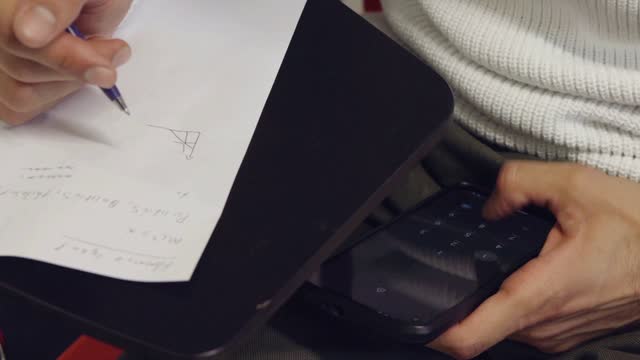
Detects sideways glances, phones and candidates getting close to each other

Attentive or distracted students and emotions during classes and lectures

Enroll faces and identify people in videos, photos and live

Entries, exits, dwell time and circulation heat map