

Hospital PPE
EPI1 · Gown/coverall, mask, gloves, goggles and face shield in patient care areas

- No alerts so far
Reports with indicators built for this scenario
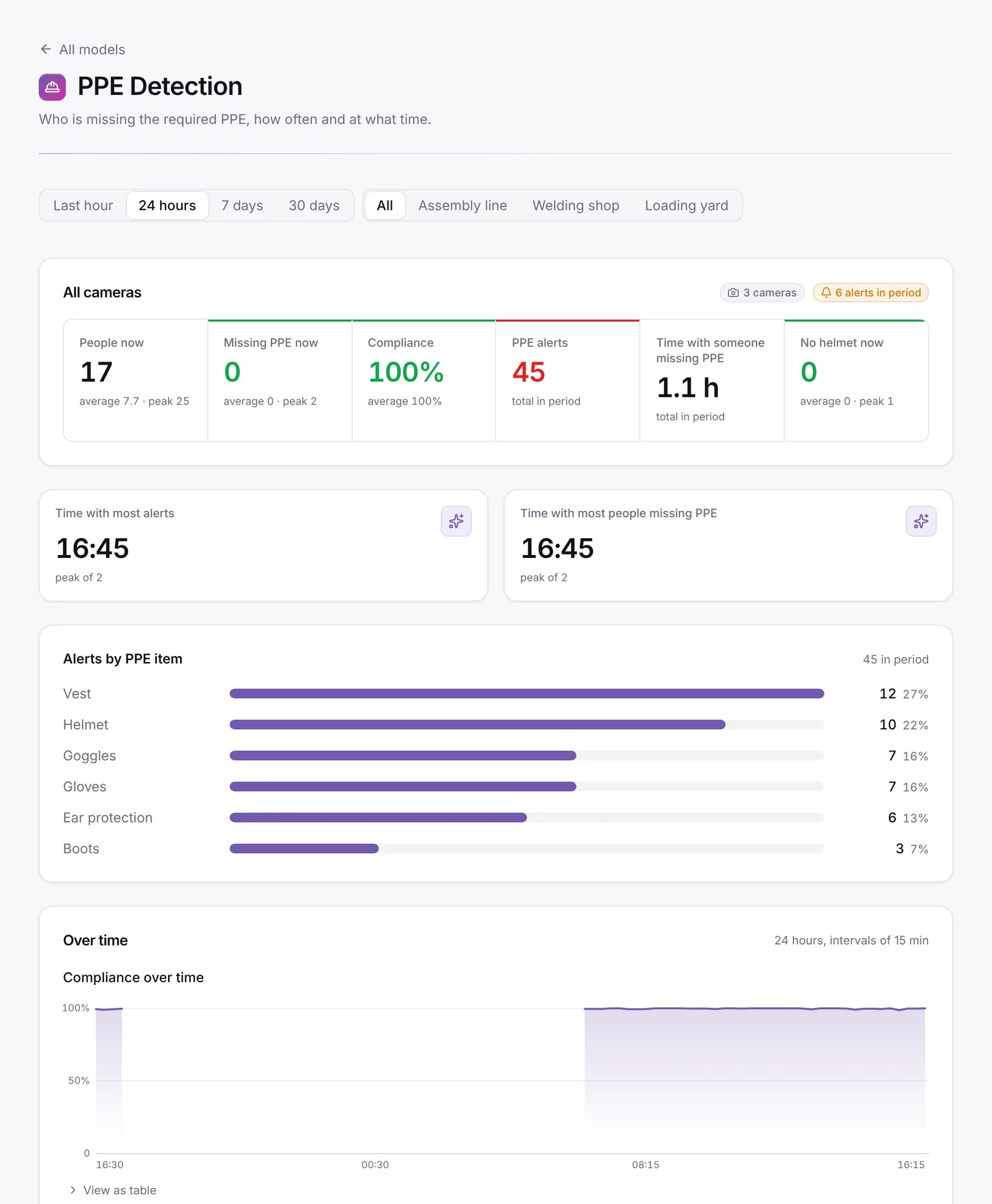
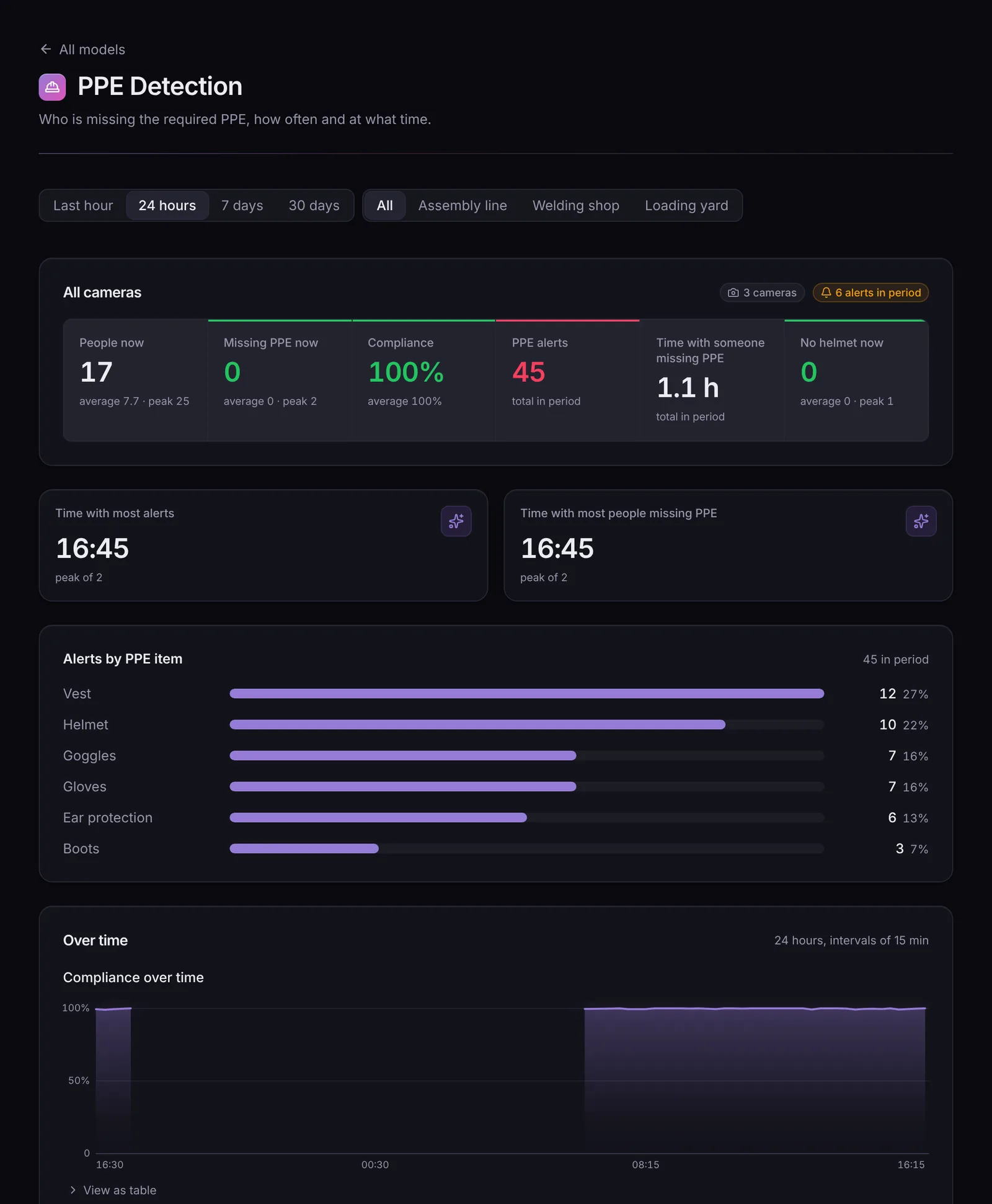
In the dashboard, each model has its own page with the indicators that matter for this scenario: period totals, computed highlights, breakdown by category and charts over time, per site and per camera.
In practice
In hospitals, correct gowning protects staff and patients: gown or coverall, mask, gloves, goggles and face shield in isolation areas, sterile supply, laboratories and ICUs. In a busy routine, checking depends on reminders and colleagues watching, and a lapse only shows up after exposure has happened.
Cameras at the entrances and inside care areas check each professional's protective equipment. A missing item triggers an alert with a photo to the nurse in charge or the occupational health team, and adherence indicators by unit and shift support the infection control committee and occupational health rules.
Frequently asked questions
- Which hospital PPE does the AI recognise?
- Gown or coverall, mask, gloves, safety goggles and face shield. Each area can have its own list of mandatory items.
- What about patient and staff privacy?
- The analysis looks at PPE, does not identify patients, and images stay in the environment the hospital chooses, with restricted access and in line with data protection law.
- Are the indicators useful for infection control and audits?
- Yes. Adherence to gowning by unit and shift, with photo evidence, supports the infection control committee and accreditation audits.
Where to install the cameras
- Anterooms and doors of isolation rooms.
- Entrances to sterile supply, laboratories and the compounding pharmacy.
- ICUs and procedure rooms, where full gowning is mandatory.
About this solution
Modelo de visão computacional treinado pela Neural para identificar, em cada colaborador, a presença ou ausência de Equipamentos de Proteção Individual — macacão, luvas, óculos de proteção, máscara e protetor facial — a partir das câmeras já instaladas. Cada não conformidade gera um alerta com evidência fotográfica e alimenta indicadores de segurança por área, turno e equipe.
- 1As câmeras (RTSP/IP) enviam as imagens para o servidor de inferência local ou em nuvem.
- 2O modelo YOLO detecta pessoas e cada EPI (ou a sua ausência) em milissegundos.
- 3Um rastreador associa as detecções a cada colaborador para não gerar alertas duplicados.
- 4Regras por área definem quais EPIs são obrigatórios (ex.: capacete e colete no canteiro).
- 5Alertas com foto são enviados ao técnico de segurança (painel, e-mail, WhatsApp, webhook).
Benefits
- Fiscalização contínua 24/7, sem depender de rondas presenciais.
- Evidência fotográfica de cada ocorrência para treinamentos e auditorias (NR-6, NR-18, ISO 45001).
- Indicadores de conformidade por área, turno e equipe para ações preventivas direcionadas.
- Redução de acidentes, afastamentos e passivos trabalhistas.
- Aproveita a infraestrutura de câmeras (CFTV) já existente.
More demos
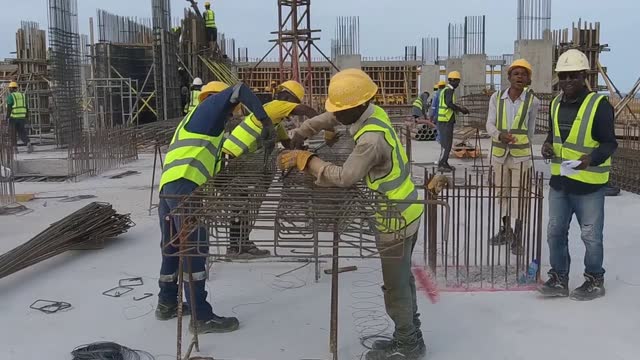
Hard hats, vests and other PPE on construction sites and production lines

Recognizes facial expressions — happiness, sadness, anger, surprise and more

People waiting, waiting time and occupancy of reception and triage, minute by minute

Alerts nursing staff when an at-risk patient sits on the edge of the bed or gets up, before a fall

Alerts when someone leaves the ward through the watched door alone, and when someone lingers at the exit
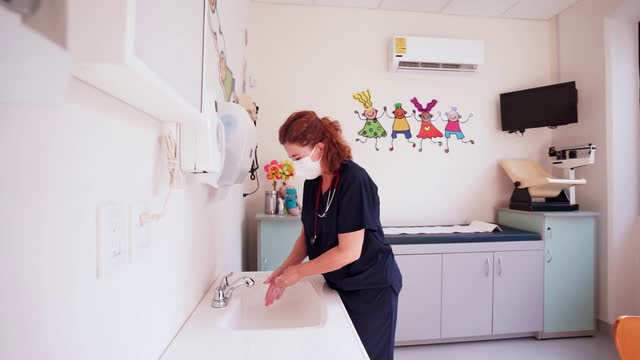
Checks that handwashing happens and lasts the minimum time